
Ginger bug recipe with honey is one of the simplest ways to create a natural, probiotic rich starter for homemade sodas without using refined sugar. If you’re looking for a clean, beginner friendly fermentation method, this ginger bug recipe with honey gives you a step by step approach to cultivating wild yeast using just fresh ginger, raw honey, and water.
Ginger bug recipe with honey works by harnessing the natural wild yeast and beneficial bacteria found on fresh ginger root. When combined with honey and filtered water, these microorganisms begin feeding on natural sugars and slowly produce carbonation through fermentation. Unlike commercial yeast, this process is entirely natural and relies on the environment around you making every ginger bug slightly unique.
Many home fermenters in the United States are turning to a ginger bug recipe with honey because they want to avoid processed white sugar. Raw honey contains enzymes, trace minerals, and natural antimicrobial properties that refined sugar lacks. While fermentation with honey requires careful feeding and balance, the result is a vibrant, active starter that can transform juices, herbal teas, and fruit infusions into naturally fizzy sodas.
In this complete guide, you’ll learn exactly how to make a ginger bug recipe with honey, including precise measurements, daily feeding instructions, fermentation timelines, safety guidelines, and troubleshooting tips. By the end, you’ll know how to tell when your starter is active and ready and how to use your ginger bug to make delicious homemade sodas.
What Is a Ginger Bug and How Does It Work?
A ginger bug recipe with honey starts with understanding what a ginger bug actually is. A ginger bug is a naturally fermented starter culture made from fresh ginger root, a natural sweetener such as honey, and filtered water. Over several days, wild yeast and beneficial bacteria multiply and create a living culture that produces natural carbonation.
When you prepare a ginger bug recipe with honey, you are cultivating microorganisms that already exist on the surface of fresh ginger. These wild yeasts feed on the natural sugars found in honey. As they consume the sugars, they release carbon dioxide and small amounts of beneficial acids. This is what creates bubbles and gives homemade sodas their natural fizz.
Natural fermentation works through a simple biological process. Yeast converts sugars into carbon dioxide and trace alcohol. Beneficial bacteria contribute to flavor development and help create a balanced fermentation environment. The result is a slightly tangy, lightly sweet, and bubbly starter that can ferment fruit juice, sweet tea, or herbal infusions.
Unlike commercial yeast, a ginger bug recipe with honey relies entirely on wild fermentation. This means results may vary slightly depending on your kitchen temperature, the freshness of your ginger, and the type of honey you use. Warmer temperatures between 68 and 75 degrees Fahrenheit typically produce faster fermentation in most US homes.
Once active, your ginger bug becomes a powerful natural starter. Just a few tablespoons can transform sweet liquid into a naturally carbonated probiotic beverage within one to three days.
Want to turn ordinary cinnamon rolls into a show stopping holiday centerpiece? Click below to discover the festive breakfast everyone will love Christmas Tree Cinnamon Rolls A Festive Holiday Breakfast You’ll Love
Why Use Honey Instead of Sugar?
Choosing a ginger bug recipe with honey instead of refined sugar comes down to health preferences, ingredient quality, and flavor. Many people in the United States are reducing processed sugar intake and looking for more natural alternatives. Honey offers a minimally processed option that still supports fermentation when used correctly.
Honey contains natural sugars such as fructose and glucose, which wild yeast can consume during fermentation. In a ginger bug recipe with honey, these sugars feed the microorganisms and allow carbonation to develop over time. Unlike white sugar, raw honey also contains trace minerals, enzymes, and antioxidants that some people prefer for nutritional reasons.
However, fermentation with honey works slightly differently than with refined sugar. Honey has natural antimicrobial properties. While this does not stop fermentation, it can slow the process if too much honey is added at once. That is why proper measurements and consistent daily feeding are important when following a ginger bug recipe with honey.
Another advantage is flavor. Honey gives the starter a subtle floral note that refined sugar does not provide. When used to make homemade soda, this can enhance fruit flavors and create a more complex taste.
Here is a simple comparison to help you decide:
| Feature | Honey | White Sugar |
|---|---|---|
| Processing level | Minimally processed | Highly refined |
| Nutrients | Trace minerals and enzymes | None |
| Fermentation speed | Moderate | Faster |
| Flavor impact | Floral and rich | Neutral |
| Preference for natural diets | High | Low |
If your goal is a cleaner ingredient list and a more natural fermentation method, a ginger bug recipe with honey is an excellent choice.
Ginger Bug Recipe With Honey Step by Step
Now let’s make your ginger bug recipe with honey using exact measurements and clear daily instructions. This method is beginner friendly and designed for US kitchens.
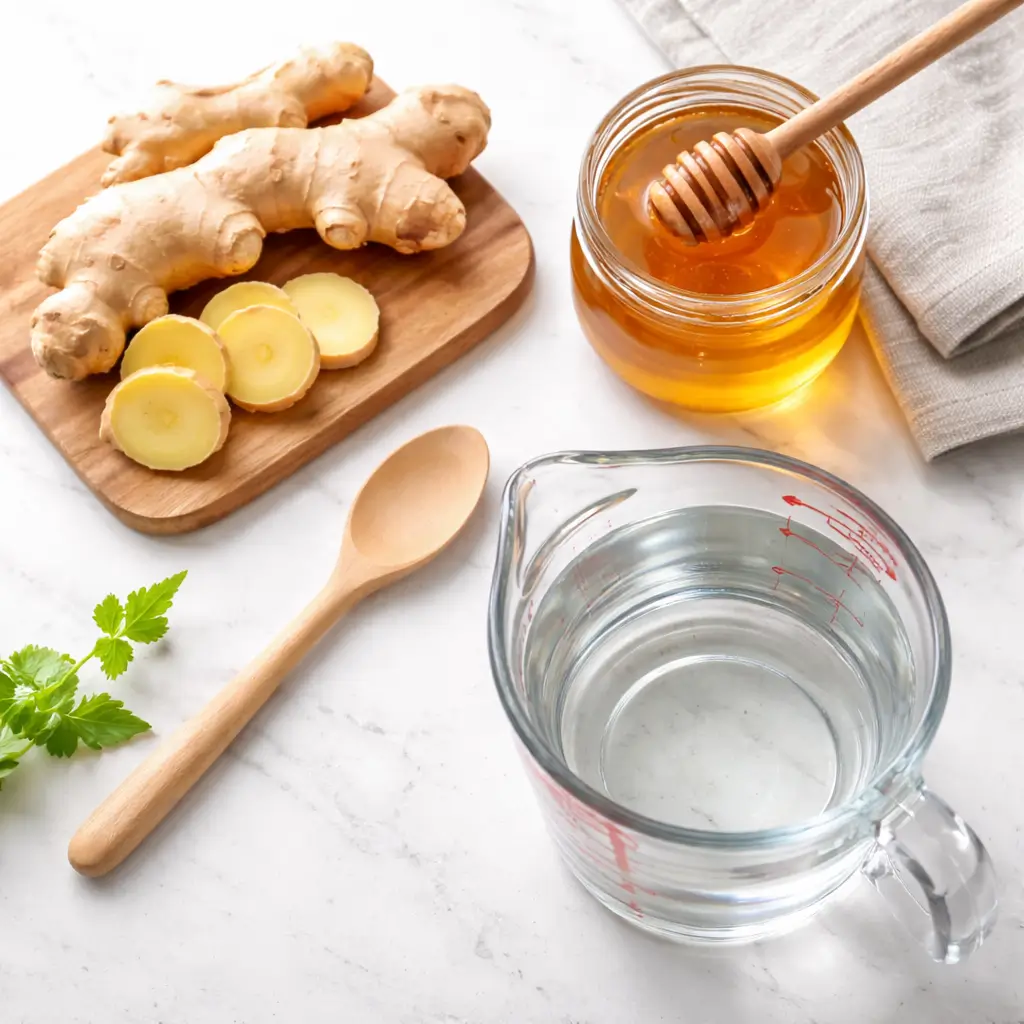
Ingredients
2 tablespoons fresh organic ginger root with skin on, finely chopped
2 tablespoons raw honey
2 cups filtered water at room temperature
Use organic ginger whenever possible since pesticides can interfere with wild yeast activity.
Equipment
1 quart glass jar
Breathable cloth or coffee filter
Rubber band
Wooden or silicone spoon
Avoid metal lids during fermentation since pressure can build up.
Day 1 Instructions
Add the chopped ginger to the jar. Pour in the honey and filtered water. Stir thoroughly until the honey dissolves. Cover the jar with a breathable cloth and secure it with a rubber band. Place it at room temperature between 68 and 75 degrees Fahrenheit.
Days 2 to 5 Feeding Schedule
Each day, add:
1 tablespoon chopped fresh ginger
1 tablespoon raw honey
Stir well at least once daily. Keeping the mixture oxygenated supports healthy fermentation.
Fermentation Timeline
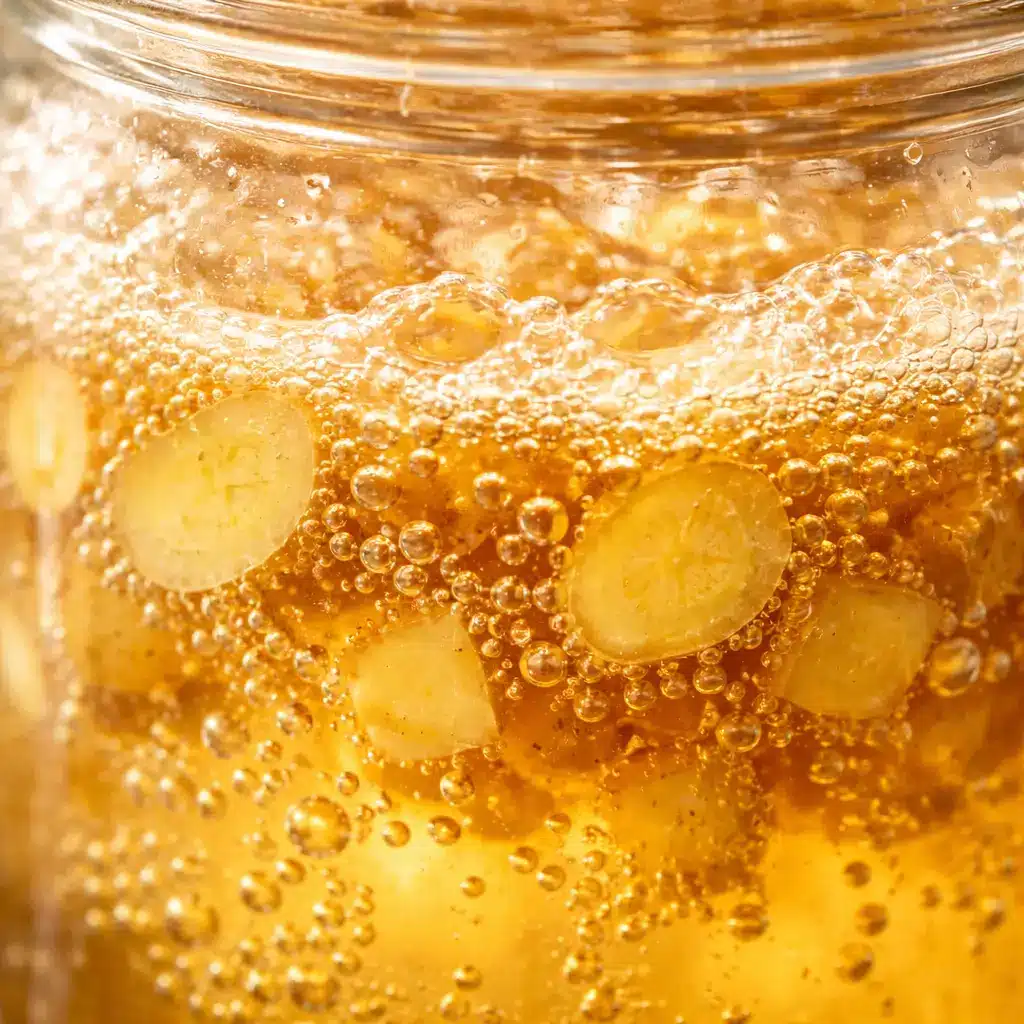
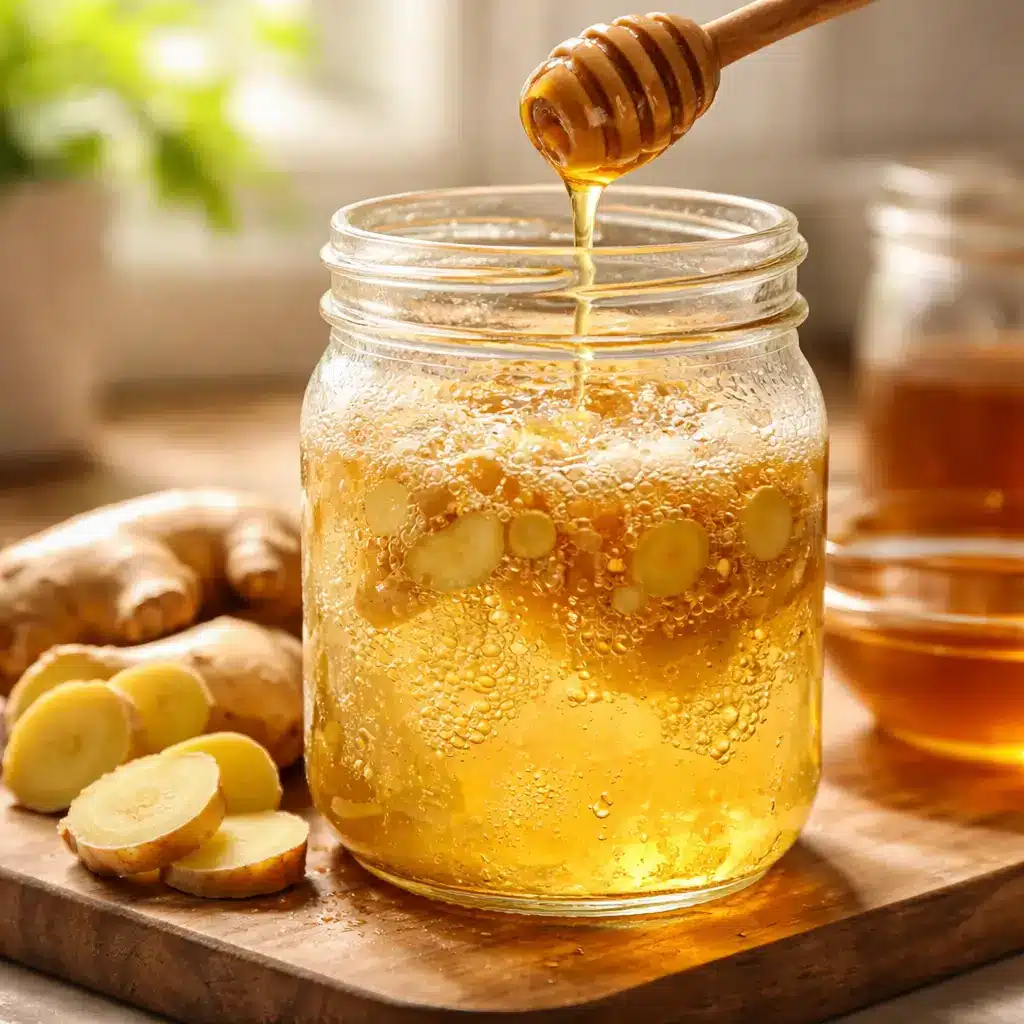
By day 3 or 4, you should start seeing small bubbles forming. By day 5, your ginger bug recipe with honey should show consistent bubbling when stirred and may produce a light fizzing sound.
Signs Your Ginger Bug Is Active
Visible bubbles rising to the surface
A slightly tangy fresh aroma
Gentle fizzing when stirred
Once you see these signs consistently, your ginger bug recipe with honey is ready to use for homemade sodas.
Daily Feeding, Maintenance, and Storage
Once your ginger bug recipe with honey becomes active, proper maintenance keeps it strong and reliable. A healthy starter should bubble consistently and smell fresh and slightly tangy. Regular feeding ensures the wild yeast stays active and ready to ferment homemade sodas.
How to Maintain an Active Ginger Bug
If you plan to use your ginger bug recipe with honey frequently, keep it at room temperature and feed it daily with:
1 tablespoon finely chopped fresh ginger
1 tablespoon raw honey
Stir thoroughly once or twice per day. Within hours of feeding, you should notice light bubbling. This indicates the microorganisms are feeding and producing carbon dioxide.
Switching to Refrigerator Storage
If you do not plan to use your starter every day, refrigeration slows fermentation. Place a loose lid on the jar and store it in the refrigerator after it becomes active.
When refrigerated:
Feed once per week with 1 tablespoon ginger and 1 tablespoon honey
Let it sit at room temperature for several hours after feeding before returning it to the fridge
Before using it for soda, remove the jar from the refrigerator and feed it for one to two days at room temperature until bubbling becomes strong again.
How Long Does It Last
A well maintained ginger bug recipe with honey can last for months. As long as it smells fresh, shows bubbles after feeding, and has no mold growth, it remains safe to use.
Signs It Has Gone Bad
Visible mold on the surface
Foul or rotten odor
No bubbling after several days of feeding
In these cases, discard it and start fresh.
How to Use Your Ginger Bug to Make Homemade Soda
Once your ginger bug recipe with honey is active and bubbly, you can use it to create naturally carbonated homemade sodas. This is where fermentation becomes exciting because you can experiment with fruit juices, herbal teas, and flavored infusions.
Basic Formula for Homemade Soda
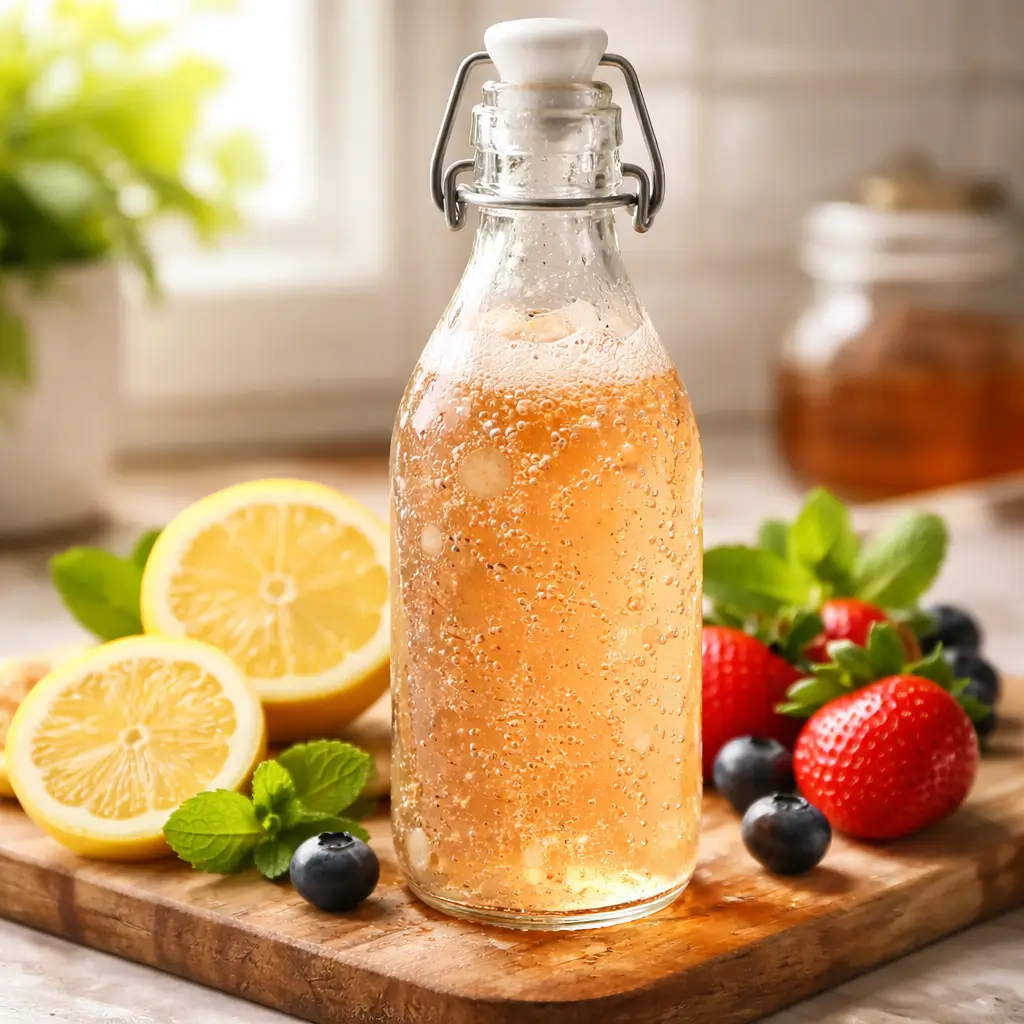
For every 4 cups of sweet liquid, use ¼ cup of active ginger bug liquid. Strain the liquid from your ginger bug to avoid transferring large ginger pieces.
The sweet liquid must contain natural sugars for fermentation. Good options include:
Fresh fruit juice such as apple, grape, or pineapple
Sweetened herbal tea
Lemonade made with honey
Lightly sweetened berry blends
Step by Step Soda Fermentation
Pour your sweet liquid into a clean glass bottle with a tight fitting lid. Add ¼ cup of strained ginger bug liquid. Leave about 1 inch of headspace at the top of the bottle. Seal tightly.
Store at room temperature between 68 and 75 degrees Fahrenheit for 1 to 3 days. Check daily by slightly loosening the lid to release excess pressure. This prevents over carbonation.
When Is It Ready
Your soda is ready when:
The bottle feels firm when squeezed
You hear a noticeable hiss when opening
Bubbles form immediately when poured
Refrigerate immediately once carbonated to slow fermentation.
Safety Tips for Carbonation
Use thick glass bottles designed for fermentation
Check pressure daily
Never leave bottles unattended for long periods
Using your ginger bug recipe with honey allows you to enjoy refreshing, probiotic rich sodas without artificial ingredients.
Section 7: Troubleshooting Common Ginger Bug Problems
Even when you carefully follow a ginger bug recipe with honey, fermentation can sometimes behave unpredictably. Temperature, ingredient quality, and feeding consistency all affect results. Below are the most common issues and how to fix them.
No Bubbles After Several Days
If your ginger bug recipe with honey is not bubbling by day 4 or 5, check these factors:
Your kitchen may be too cold. Fermentation slows below 68 degrees Fahrenheit. Move the jar to a warmer area.
Your ginger may not be fresh. Always use fresh organic ginger with skin on.
You may not be feeding consistently. Add daily ginger and honey without skipping days.
Stirring once or twice daily also helps introduce oxygen and support yeast growth.
Mold on the Surface
Mold appears as fuzzy growth in white, green, or black colors. If you see mold, discard the entire batch immediately. Do not attempt to scrape it off. Always use clean utensils and filtered water to prevent contamination.
Strong Alcohol Smell
A mild fermented aroma is normal. However, if your ginger bug recipe with honey smells strongly alcoholic, you may be over fermenting or adding too much honey at once. Reduce feeding amounts slightly and monitor temperature.
Weak Soda Carbonation
If your homemade soda is flat, the starter may not be active enough. Feed your ginger bug at room temperature for one to two days before using it again.
Here is a quick reference guide:
| Problem | Likely Cause | Solution |
|---|---|---|
| No bubbles | Cold temperature | Move to warmer spot |
| Mold growth | Contamination | Discard and restart |
| Strong alcohol smell | Over fermentation | Reduce feeding and monitor |
| Flat soda | Weak starter | Reactivate at room temp |
With proper care, your ginger bug recipe with honey will become reliable and consistent.
Section 8: Safety Guidelines and Best Practices
When preparing a ginger bug recipe with honey, food safety and proper fermentation habits are essential. Although wild fermentation is natural, it requires clean handling and careful monitoring to ensure safe results.
Use Clean Equipment
Always wash jars, spoons, and bottles thoroughly with hot water before use. Avoid using reactive metal containers for long term fermentation. Glass jars are ideal for a ginger bug recipe with honey because they do not interfere with acidity levels.
Choose Quality Ingredients
Fresh organic ginger is highly recommended. Non organic ginger may contain residues that interfere with wild yeast activity. Raw honey works best because it contains natural enzymes and has not been heavily processed.
Filtered water is important. Chlorinated tap water can slow or inhibit fermentation.
Monitor Fermentation Closely
Keep your ginger bug recipe with honey at room temperature between 68 and 75 degrees Fahrenheit. Check daily for bubbling activity and aroma changes. A healthy starter should smell fresh, slightly sweet, and mildly tangy.
If you notice unusual odors, discoloration, or visible mold, discard the batch immediately.
Prevent Bottle Over Pressure
When making soda, always:
Use thick glass bottles designed for fermentation
Leave headspace in bottles
Release pressure daily during active fermentation
Refrigerate finished soda promptly to slow carbonation and prevent excess pressure buildup.
Know When to Start Over
If your starter stops bubbling completely despite proper feeding, it may be time to restart. Fermentation depends on living microorganisms, and sometimes environmental factors can disrupt them.
Following these safety guidelines ensures your ginger bug recipe with honey remains both effective and safe to use.
Conclusion
Making your own ginger bug recipe with honey is a simple yet rewarding way to step into the world of natural fermentation. Instead of relying on commercial yeast or refined sugar, you are cultivating wild microorganisms using fresh ginger, raw honey, and filtered water. This traditional method allows you to create a living starter that produces natural carbonation and supports homemade probiotic beverages.
One of the biggest advantages of using a ginger bug recipe with honey is ingredient quality. Honey offers a more natural sweetening option compared to refined sugar, and many people in the United States prefer it for its minimal processing and trace nutrients. While fermentation with honey may move slightly slower, proper daily feeding and consistent room temperature conditions make the process reliable and beginner friendly.
By following the step by step instructions in this guide, you now understand how to prepare your starter, feed it daily, recognize when it becomes active, and use it safely. You also know how to troubleshoot common problems such as lack of bubbles or weak carbonation. With patience and attention, your ginger bug can remain active for months and become a dependable base for homemade sodas.
Whether you are making fruit sodas, herbal sparkling drinks, or experimenting with new flavors, your ginger bug recipe with honey gives you full control over ingredients and sweetness. The result is a naturally fizzy beverage without artificial additives or preservatives.
Start small, stay consistent with feedings, and enjoy the process. Natural fermentation is both science and tradition, and now you have the knowledge to confidently create your own ginger bug recipe with honey at home.
Frequently Asked Questions About Ginger Bug Recipe With Honey
1. Can I really make a ginger bug recipe with honey instead of sugar?
Yes, you can successfully make a ginger bug recipe with honey. Honey contains natural sugars that feed wild yeast just like white sugar does. However, fermentation may move slightly slower because honey has natural antimicrobial properties. Using raw honey in proper daily amounts ensures strong fermentation.
2. How long does a ginger bug recipe with honey take to become active?
Most starters become active within 3 to 5 days at room temperature between 68 and 75 degrees Fahrenheit. You will see bubbles forming and hear light fizzing when stirred. Cooler temperatures may extend the timeline by a day or two.
3. What type of honey works best for fermentation?
Raw, unfiltered honey is ideal because it contains natural enzymes and beneficial compounds. Highly processed honey may still work, but raw honey typically produces more consistent fermentation results in a ginger bug recipe with honey.
4. Does a ginger bug recipe with honey contain alcohol?
Fermentation naturally produces a small amount of alcohol. However, in homemade soda fermentation, the alcohol level is usually very low. When refrigerated promptly after carbonation, the alcohol content remains minimal.
5. Why is my ginger bug not bubbling?
Lack of bubbles usually means the environment is too cold, the ginger is not fresh, or feeding has been inconsistent. Move the jar to a warmer location and continue feeding daily with fresh ginger and honey.
6. Can I use powdered ginger instead of fresh ginger?
Fresh ginger is strongly recommended. Powdered ginger lacks the live wild yeast present on fresh ginger skin, which is necessary for fermentation in a ginger bug recipe with honey.
7. How do I know if my ginger bug has gone bad?
If you see fuzzy mold growth, detect a rotten smell, or notice unusual discoloration, discard it immediately. A healthy starter should smell fresh and slightly tangy.
8. Can I reduce the amount of honey during feeding?
Yes, but do not eliminate it completely. The microorganisms need sugar to survive. If fermentation seems too strong, slightly reduce honey while maintaining daily feeding consistency.
9. How long can I keep my ginger bug alive?
With proper weekly feeding in the refrigerator or daily feeding at room temperature, a ginger bug recipe with honey can last for several months.
10. Can children drink soda made from a ginger bug?
Homemade soda made from a ginger bug recipe with honey typically contains very low alcohol levels. Many families enjoy it as a natural alternative to commercial sodas, but refrigeration after carbonation is important.
11. Why does my ginger bug smell very strong?
A mild tangy aroma is normal. A very strong alcohol smell may indicate over fermentation. Adjust feeding amounts and monitor temperature more closely.
12. Do I need to peel the ginger?
No. Keeping the skin on fresh organic ginger helps introduce natural wild yeast into your ginger bug recipe with honey.
13. Can I flavor my ginger bug starter directly?
It is better to keep the starter simple with ginger and honey only. Add flavors during the soda fermentation stage instead of altering the main starter culture.
14. What is the best temperature for fermentation?
Room temperature between 68 and 75 degrees Fahrenheit works best in most US homes. Temperatures outside this range may slow or disrupt fermentation.
15. How much ginger bug should I use for homemade soda?
A general guideline is ¼ cup of active ginger bug liquid for every 4 cups of sweetened beverage. This ratio provides strong carbonation without overwhelming flavor.
Follow us on Pinterest
ginger bug recipe with honey simple fermentation that works
Ingredients
Method
- Add 2 tablespoons finely chopped fresh ginger to a clean 1 quart glass jar.
- Pour in 2 tablespoons raw honey and 2 cups filtered water. Stir thoroughly until the honey dissolves completely.
- Cover the jar with a breathable cloth or coffee filter and secure with a rubber band. Leave at room temperature between 68 and 75 degrees Fahrenheit.
- Each day for 4 to 5 days, add 1 tablespoon fresh chopped ginger and 1 tablespoon raw honey. Stir well once or twice daily.
- By day 3 to 5, look for visible bubbles and a light tangy aroma. When the mixture bubbles consistently after stirring, the ginger bug is active and ready to use.
- To make homemade soda, strain ¼ cup of liquid from the active ginger bug and add it to 4 cups of sweetened juice or tea. Bottle tightly and ferment at room temperature for 1 to 3 days before refrigerating.