
Sushi isn’t just food it’s an experience. And when that experience gets a colorful upgrade, you get prismatic sushi, a dazzling creation that blends traditional Japanese techniques with bold, vivid visuals. This prismatic sushi recipe isn’t just Instagram-worthy it’s surprisingly simple to make at home and bursting with customizable options. Whether you’re a sushi purist, an adventurous foodie, or someone looking to impress at your next dinner party, prismatic sushi rolls bring together flavor, flair, and fun.
In this article, we’ll walk you through exactly how to make your own prismatic sushi recipe from scratch, share ingredient options (including vegetarian twists), and show you what makes this trend different from rainbow sushi. Along the way, we’ll also explore health benefits, share expert rolling tips, and answer popular questions like “Is prismatic sushi healthy?” and “Can it be made without fish?”
Don’t miss our vibrant ingredient inspiration in this recipe using vinegar and pink salt: Check out this beautiful blend
What Is Prismatic Sushi? A Vibrant Fusion of Taste and Art
Understanding the Concept of Prismatic Sushi
At its core, prismatic sushi is all about bold colors, striking designs, and creative flavor combos. Unlike traditional maki or nigiri, these sushi rolls use a mix of naturally colored rice, vivid vegetables, and patterned fillings to form an almost mosaic-style roll when sliced. The term “prismatic” captures the vivid play of colors found in glass or crystals and this dazzling effect is mirrored beautifully in the presentation of the dish.
It’s more than just assembling fish and rice it’s a form of edible artistry, designed to captivate the eyes and satisfy the palate in every bite.
Origin and Cultural Inspiration Behind Prismatic Sushi
Rooted in the elegance, precision, and simplicity of traditional Japanese cuisine, sushi has evolved in the West to embrace bold creativity and striking visual flair. Prismatic sushi evolved from the modern desire to turn food into spectacle, combining global flavors, art, and social media trends. It borrows ideas from rainbow sushi and artistic plating traditions, especially in high-end omakase dining.
Social media platforms like TikTok and Instagram have been instrumental in pushing the concept viral especially among millennial and Gen Z home cooks. As more people began experimenting with food coloring, vegetable dyes, and non-traditional ingredients, the prismatic sushi recipe became a staple of food influencers and color enthusiasts alike.
Prismatic vs Traditional Sushi: What Sets It Apart?
Here’s a simplified side-by-side comparison to clarify the differences:
| Feature | Traditional Sushi | Prismatic Sushi |
|---|---|---|
| Visual Style | Minimalist | Colorful, artistic |
| Rice Appearance | Plain white rice | Multicolored dyed rice |
| Ingredient Types | Seafood-focused | Mixed veggies, fruits, proteins |
| Presentation | Simple slices | Detailed patterns and layers |
| Purpose | Flavor & tradition | Visual appeal & creativity |
Prismatic sushi doesn’t replace the traditional it enhances it with visual storytelling, making your plate a canvas.
Why the Prismatic Sushi Recipe Is Trending Now
How Vibrant Sushi Took Over Social Media Feeds
One scroll through TikTok or Instagram, and you’ll spot a food trend that’s almost too beautiful to eat: prismatic sushi recipes. These artistic rolls are made to go viral with bright layers of neon-hued rice, spiral-cut vegetables, and geometric patterns that look like they belong in a museum instead of your dinner plate.
But why the sudden surge? It’s part of the ongoing evolution of “food as content.” Eye-catching food isn’t just for eating anymore it’s for sharing. Prismatic sushi makes people stop scrolling, whether they’re home cooks, artists, or seasoned chefs.
Short-form video platforms also help demystify the process, showing how easy it is to create a masterpiece with a bamboo mat and some food-safe color. One sushi artist even went viral for slicing open their roll to reveal a sunset gradient. The result? Millions of views and a global wave of prismatic sushi fans.
How Gen Z and Millennials Are Shaping Food Presentation
Gone are the days of brown dinners and bland presentation. Today’s generation wants vibrancy, health, and shareability. Millennials and Gen Z especially value personalization and aesthetic appeal. They view cooking as creative expression and prismatic sushi fits perfectly into that lifestyle.
This audience wants meals that are:
- Visually rewarding
- Easy to adapt to dietary preferences
- A conversation starter
Incorporating ingredients like beet-colored rice, butterfly pea flower dye, or turmeric-tinted quinoa shows that your food choices can reflect your personality. Food isn’t just sustenance anymore it’s part of your identity.
Looking to create something more playful and visual in your next kitchen experiment? Don’t miss our Starbucks cake pops recipe another fun, customizable treat that taps into this same trend.
Visual Appeal: Why Prismatic Sushi Wins Hearts
Beyond aesthetics, prismatic sushi taps into emotion. The human brain is naturally attuned to notice and react to vibrant colors. Bright tones stimulate appetite and spark curiosity. It’s the same reason candy companies and children’s cereals use bold packaging color triggers interest.
When you present a dish that looks like art, people slow down, savor more, and share the experience. That alone makes prismatic sushi ideal for:
- Celebrations and birthdays
- Date nights at home
- Kids’ sushi-making parties
- Food blogger content
Even if you’re not a master chef, the final result always looks impressive. And that’s the magic.
Building Blocks of the Ultimate Prismatic Sushi Creation
Core Essentials: Rice, Nori, and Fillings
Every standout prismatic sushi creation starts with a handful of essential, can’t-skip ingredients at its core.
- Sushi Rice (short-grain, sticky, and seasoned with rice vinegar, sugar, and salt)
- Nori Sheets (seaweed wraps that hold it all together)
- Fillings (from fresh fish to crunchy veggies to tropical fruits)
While the recipe structure mimics traditional sushi, the vibrant colors and creative layers take it to another level. Your goal isn’t just taste it’s texture, color contrast, and visual impact.
Start with perfectly cooked and seasoned sushi rice. Then prepare 3–4 types of colorful fillings. Pro tip: Layer each ingredient in narrow strips to ensure the sliced roll reveals distinct, colorful prismatic bands.
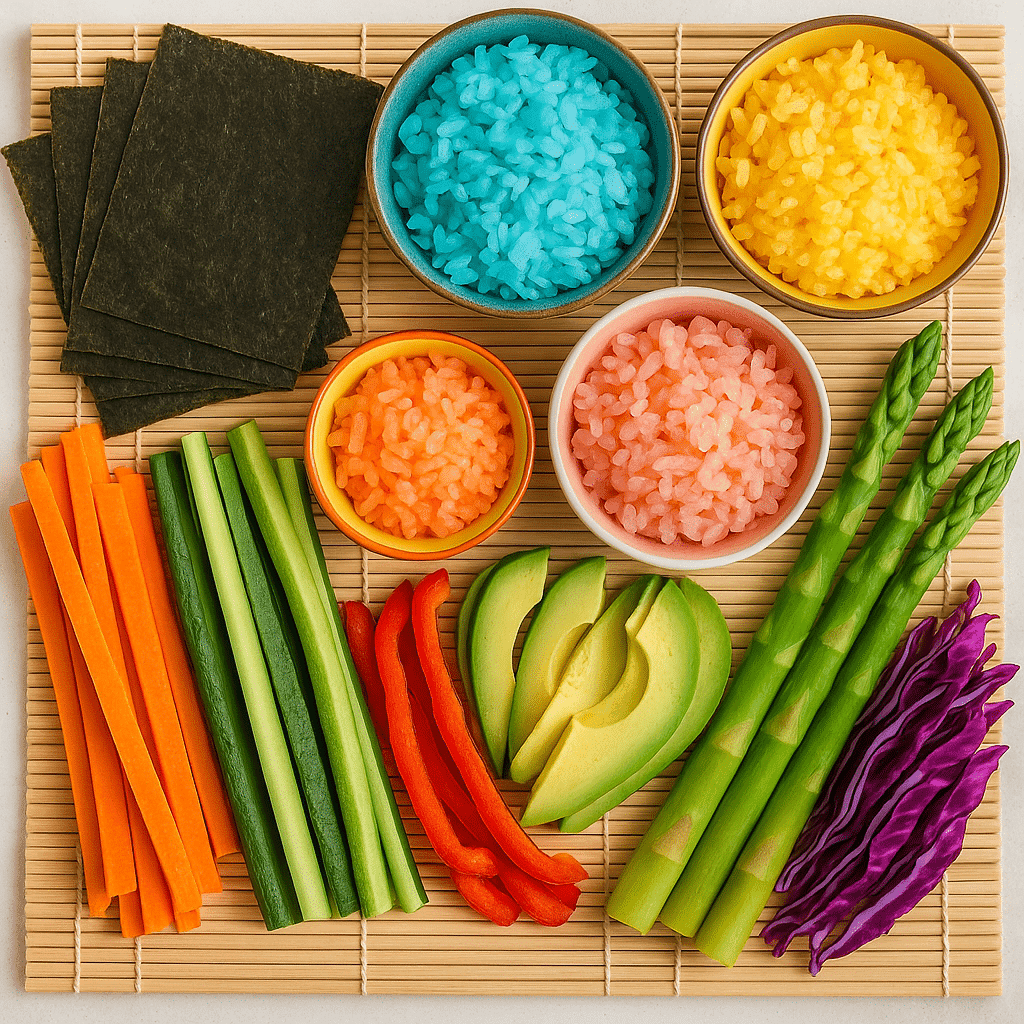
Natural Food Dyes and Vibrant Veggies
Artificial dyes? Skip ’em. The best part about making a prismatic sushi recipe at home is using real, plant-based ingredients to create bold hues. Here’s a quick cheat sheet for naturally coloring your rice:
| Color | Natural Ingredient | How to Use |
|---|---|---|
| Pink | Beet juice | Add while mixing rice vinegar solution |
| Yellow | Turmeric powder | A pinch added while rice is warm |
| Blue | Butterfly pea flower | Steeped like tea, then mixed in |
| Green | Matcha or spinach juice | Add while rice is still warm |
| Orange | Carrot juice or paprika | Stir in small amounts |
For fillings, think outside the box:
- Rainbow carrots
- Purple cabbage
- Pickled radishes
- Avocados for green contrast
- Mango for sweet pop
The more diverse your palette, the more stunning the result. Want to combine color and health? These same ingredients boost your vitamin intake while creating eye-popping visuals.
Protein Options: Tuna, Crab, Tofu, or Vegan-Friendly
Prismatic sushi isn’t just a vegetarian playground it can be packed with lean proteins too. Here are your best options:
- Tuna: Classic and vibrant, especially spicy tuna
- Imitation Crab: Mild flavor, holds shape well
- Smoked Salmon: Great contrast against bright veggies
- Tofu or Tempeh: Perfect for plant-based rolls
- Shrimp or Eel: Adds complexity in texture
Want to go fully vegan? No problem. Marinated tofu cubes or jackfruit “crab” shreds work like a charm. Bonus: these soak up color and flavor just like meat or fish.
Need more vibrant food pairings for themed dinners? Don’t miss our fun twist on Viking pancakes: Get inspired
Step-by-Step Prismatic Sushi Recipe Guide
Preparing the Sushi Rice with a Color Boost
Your prismatic sushi recipe starts with perfectly prepared rice the colorful foundation of your roll. Here’s how to do it right:
- Cook the rice using a 1:1.2 rice-to-water ratio. Use short-grain sushi rice for the stickiness you need.
- Season the rice with a mixture of rice vinegar, sugar, and salt (approx. For every 2 cups of uncooked rice, combine ¼ cup of vinegar with 2 tablespoons of sugar and 1 teaspoon of salt.
- Divide into portions separate the rice into small bowls depending on how many colors you
- want to make.
- Color the rice naturally using these safe, vivid ingredients:
- Beet juice (pink/red)
- Matcha powder (green)
- Turmeric (yellow/orange)
- Butterfly pea flower (blue/purple)
- Purple cabbage soak water (lavender/blue tone)
Use a rice paddle to softly fold the mixture in each bowl, keeping the grains intact and fluffy. Let the rice cool to room temperature before rolling.
Looking to elevate the texture and visual appeal even more? Add a sprinkle of black sesame seeds to a few batches of rice for a galaxy swirl effect.
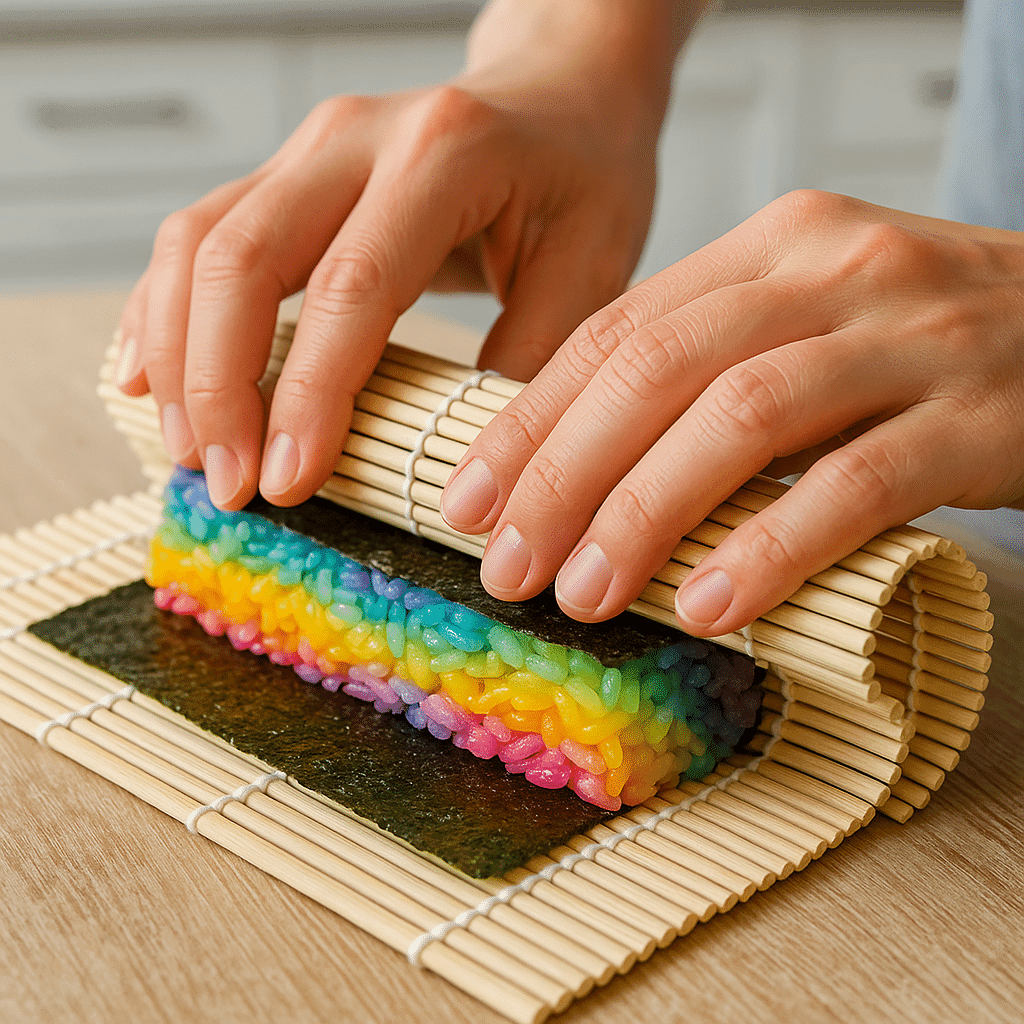
Making Multi-Hued Vegetable or Protein Fillings
Now it’s time to prep your fillings for maximum color and contrast. Here’s a quick pick-and-mix chart of ideas:
| Color | Filling Options |
|---|---|
| Red/Pink | Red bell pepper, radish, beet ribbons |
| Orange | Carrot, sweet potato, orange bell pepper |
| Yellow | Mango, pickled daikon, turmeric tofu |
| Green | Cucumber, avocado, edamame, zucchini |
| Purple | Purple cabbage, purple yam |
Slice each into long matchsticks or thin strips to ensure they roll smoothly and layer beautifully. If using protein like tofu or crab, cut into similar widths.
Bonus tip: Lightly season your fillings with salt or rice vinegar to enhance flavor balance across the roll.
Rolling Technique for Perfect Prismatic Layers
Rolling your prismatic sushi takes a little patience but it’s where the art really comes alive.
Here’s how to roll your masterpiece:
- Lay out your bamboo mat and place a sheet of plastic wrap over it for easy clean-up.
- Place a nori sheet shiny-side down.
- Spread a layer of colored rice about ¼ inch thick, leaving ½ inch border at the top.
- Add your fillings in a neat horizontal line 1 inch from the bottom. Stack multiple fillings to show off layers.
- Start rolling tightly with even pressure. Use the mat to guide but don’t squeeze too hard you want clean layers, not squished shapes.
- Seal the edge with a dab of water and let the roll sit for 2–3 minutes.
- Slice with a wet, sharp knife clean between each slice for perfect presentation.
Want to take the edge off your first time trying this? Try making mini rolls first they’re easier to control and great for testing flavor combos.
Tools and Tips for Perfecting Your Prismatic Sushi
Must-Have Kitchen Tools for Sushi Rolling
The good news? You don’t need fancy equipment to make your own prismatic sushi recipe. A few basics will do the trick:
| Tool | Purpose |
|---|---|
| Bamboo rolling mat | Helps roll sushi tightly and evenly |
| Sharp chef’s knife | Essential for clean, precise slicing |
| Plastic wrap | Keeps the mat clean and prevents sticking |
| Rice paddle or spoon | Ideal for mixing seasoned rice without damage |
| Cutting board | A clean, flat surface for assembling rolls |
| Small bowls | For dividing and coloring rice |
If you’re aiming for ultra-thin rolls or layered aesthetics, consider using a mandoline slicer for your veggies it helps achieve consistent, camera-ready cuts.
How to Avoid Common Mistakes in Sushi Making
Even with the prettiest ingredients, small missteps can throw off the whole look. Here’s what to avoid:
Spreading the rice too thick
This leads to bulky, uneven rolls. Stick to a thin, even layer.
Using too many fillings
Less is more. Overfilling causes breakage and poor structure. Stick to 3–4 ingredients max per roll.
Cutting with a dry knife
Always wet your knife before slicing, and wipe between cuts to prevent sticking or smearing.
Not sealing the roll well
Use a dab of water along the edge of the nori so it sticks just like a sushi glue.
Rolling without a mat
You might think you can free-hand it, but using a bamboo mat gives you even pressure and symmetry.
Once you master these small techniques, you’ll be shocked at how professional your rolls look even on your first try.
Need another vibrant, beginner-friendly recipe to test your presentation skills? Check out our strawberry avocado combo it’s bold, colorful, and full of flavor.
Storing, Slicing, and Serving Prismatic Sushi
If you’re prepping your prismatic sushi recipe ahead of time, proper storage is key:
- Wrap tightly in plastic wrap to prevent the rice from drying out
- Refrigerate and keep fresh for up to 24 hours.
- Let it sit at room temp for 10–15 minutes before serving (cold rice hardens and affects flavor)
When slicing, use a very sharp knife dipped in water cut with one swift motion. Don’t saw back and forth.
For serving, place slices in alternating patterns by color, or arrange them in a circle on a bamboo board. Top with sesame seeds, edible flowers, or a drizzle of sriracha mayo for a final flourish.
Want a perfect pairing for your sushi night spread? Don’t miss this cranberry pistachio cheese ball recipe colorful and totally unique.
Is Prismatic Sushi Healthy? Breaking Down the Nutrition
Nutritional Benefits of Colorful Veggies and Lean Proteins
Yes, the prismatic sushi recipe isn’t just for show it can also be surprisingly nutritious. By using fresh, whole-food ingredients and skipping deep frying or heavy sauces, prismatic sushi becomes a clean, health-forward meal.
Here’s what you’re really eating in every slice:
- Colored rice: Still packed with carbs for energy, but when dyed with beet juice, matcha, or turmeric, you’re also adding antioxidants, chlorophyll, and anti-inflammatory compounds.
- Veggie fillings: Think fiber, vitamins A, C, and K, and even skin-boosting nutrients like lycopene (from red veggies) and lutein (from green ones).
- Lean proteins: Tuna, tofu, shrimp, or crab provide high-quality protein with low saturated fat.
Need a deeper breakdown? Here’s what a standard veggie-loaded roll (8 slices) might look like nutritionally:
| Nutrient | Approx. Amount |
|---|---|
| Calories | 260–300 kcal |
| Protein | 8–12g |
| Carbohydrates | 45–50g |
| Fiber | 4–6g |
| Fat | 4–6g |
| Sugar | 2–4g (natural) |
That makes it perfect for lunch, light dinner, or even a post-workout meal if you include extra protein.
Calorie Breakdown and Macro Balance
The calorie count in your prismatic sushi recipe will vary based on fillings and rice volume, but the great thing is you control the portions and macros.
Want it lighter? Use less rice and more veggies.
Want it more filling? Add in protein-rich elements like tofu, egg, or smoked salmon.
Avoiding sugar? Adjust the vinegar seasoning or skip sweet sauces.
Here’s how macros can shift based on add-ins:
| Add-In | What It Adds |
|---|---|
| Avocado | Healthy fats, fiber |
| Tofu | Plant-based protein |
| Crab or shrimp | Lean protein, minerals |
| Mango or pineapple | Vitamin C, natural sugar |
| Black sesame seeds | Antioxidants, calcium |
How to Make Your Sushi Low-Carb or Gluten-Free
On a low-carb or gluten-sensitive diet? Prismatic sushi is easy to adapt:
Low-Carb Options
- Swap sushi rice for riced cauliflower (mix with vinegar to mimic flavor)
- Swap out nori for delicate egg crepes or collard green leaves as a creative wrapping alternative.
- Prioritize lean proteins and leafy greens over heavy, starchy ingredients for a more balanced bite.
Gluten-Free Adjustments
- Use gluten-free soy sauce or tamari
- Make sure your nori sheets and pickled ingredients are labeled gluten-free to ensure safe consumption.
- Skip imitation crab unless it’s labeled gluten-free
Prismatic sushi is inherently customizable meaning with a few tweaks, it fits just about any dietary goal.
Want another healthy meal idea full of vibrant flavor and protein balance? Explore our protein-rich pancake bowl recipe with berries
Vegetarian and Vegan Prismatic Sushi Recipe Options
Plant-Based Fillings That Pop with Color and Taste
One of the best things about a prismatic sushi recipe is that it doesn’t need fish to be flavorful or beautiful. In fact, vegan and vegetarian versions often shine even brighter, thanks to colorful fruits, vegetables, and creative meat-free proteins.
Here are plant-based filling ideas that deliver both flavor and visual flair:
| Ingredient | Flavor Profile | Color Impact |
|---|---|---|
| Avocado | Creamy, rich | Green |
| Mango | Sweet, tropical | Yellow/Orange |
| Cucumber | Crisp, fresh | Green |
| Red Bell Pepper | Crunchy, sweet | Red |
| Pickled Daikon | Tangy, slightly sharp | Yellow |
| Shredded Purple Cabbage | Earthy, slightly peppery | Purple |
| Roasted Sweet Potato | Soft, savory-sweet | Orange |
| Watermelon Radish | Mild, lightly sweet | Pink/Green gradient |
| Jackfruit (seasoned) | Meaty texture, subtle flavor | Tan or color-dyed |
Use 3–4 of these in a single roll to create stunning contrast and texture. Want to wow visually? For a stunning effect, shave watermelon radish into ultra-thin slices and arrange them on the outside of the roll like delicate flower petals.
Vegan Protein Alternatives Like Tempeh or Jackfruit
Sushi is often associated with raw fish, but plant-based proteins are just as satisfying, especially in a prismatic sushi format where the look matters as much as the bite.
Here are vegan-friendly protein options that hold their shape and take on flavor well:
- Tofu (marinated in tamari, maple, and garlic, then baked or pan-seared)
- Tempeh (offers firmer texture and more protein per gram)
- Jackfruit (great for shredded “crab”-style sushi)
- Chickpea miso paste (for a creamy umami boost)
- Smoked mushrooms (like shiitake or king oyster for “meaty” chew)
Marinate proteins in coconut aminos, sesame oil, or miso broth to give them that sushi-worthy umami kick.
Need more vegan food creativity? Don’t miss our comforting couscous recipes they’re wholesome, hearty, and meat-free too.
Ensuring Your Sushi Stays Cruelty-Free Yet Flavorful
Being plant-based doesn’t mean you have to compromise on depth of flavor or presentation. Here’s how to make your vegan prismatic sushi recipe feel gourmet:
- Add a touch of truffle oil or chili oil before rolling
- Drizzle with cashew cream or spicy vegan mayo on top
- Top with microgreens or edible flowers for flair
- Use black or red rice for extra nutrients and drama
- Sprinkle with furikake (vegan version) for a flavor bomb
These little touches elevate your roll from “just veggies” to show-stopping centerpiece.
Prismatic Sushi vs Rainbow Sushi – What’s the Difference?
Ingredients and Visual Distinctions Between Both Types
At first glance, you might mistake a prismatic sushi recipe for rainbow sushi but they’re not the same dish. While both are vibrant and colorful, their construction, ingredients, and visual impact are quite different.
| Feature | Prismatic Sushi | Rainbow Sushi |
|---|---|---|
| Visual Layout | Layers of multicolored rice + fillings | Fish slices draped over top of roll |
| Color Sources | Natural-dyed rice, veggies, toppings | Variety of fish colors (tuna, salmon, avocado) |
| Filling Style | Often veggie or artistic fillings | Standard crab, cucumber, avocado |
| Fish Content | Optional or none (can be vegan) | Always includes multiple fish types |
| Focus | Artistry and internal layers | Classic sushi with external flair |
Rainbow sushi uses slices of colorful fish and fruit to decorate the top of a basic California roll. Prismatic sushi takes a vibrant approach, infusing color into every layer from the rice and fillings to the final presentation resulting in a stunning, mosaic-like creation.
If rainbow sushi is a painted canvas, prismatic sushi is a stained glass window.
Flavor Profiles: Prismatic vs Rainbow Sushi
Flavor-wise, the differences are just as distinct.
Rainbow Sushi tends to be heavier on seafood flavor because it uses raw fish like:
- Tuna
- Salmon
- White fish
- Shrimp
- Sometimes mango or avocado for contrast
It’s rich, umami-forward, and fits best with traditional sushi sauces like soy and wasabi.
Prismatic Sushi, on the other hand, leans into:
- Pickled and fresh vegetables
- Tofu or vegan proteins
- Seasoned rice with infused flavors (e.g., beet, turmeric, matcha)
- Sweet-savory combinations (like mango with chili sauce)
Thanks to its variety of vibrant fillings, prismatic sushi opens the door to inventive and unexpected flavor combinations. Want spicy, tangy, and sweet in one bite? It’s totally doable.
Which Is Easier to Make at Home?
Hands down, the prismatic sushi recipe wins the ease battle especially for beginners or families. Why?
- No raw fish required
- Lower risk of food safety concerns
- Ingredients are accessible (available at most grocery stores)
- Easily adjustable for dietary needs
- No slicing raw fish = less knife skill needed
Rainbow sushi requires sushi-grade fish and precise slicing. Prismatic sushi lets you focus on creativity, not technique.
If you want a dish that’s fun to build with kids, safe for all diets, and stunning on social media? Prismatic sushi is the clear pick.
Want to explore other food hybrids that challenge the traditional? Discover our fusion-inspired creation featuring a bold blend of pink salt and vinegar.
Creative Plating and Stylish Ways to Serve Prismatic Sushi
Plating Like a Pro: Color Schemes and Designs
Once your prismatic sushi recipe is sliced and ready, it’s time to turn your plate into an art gallery. Presentation is key especially with food that already looks like a kaleidoscope.
Here are some easy but impactful plating ideas:
- Color-fade arrangement: Line up sushi slices to transition smoothly from pale hues to deep, rich tones for a striking visual effect.
- Spiral display: Arrange the sushi pieces in a circular swirl pattern on a round platter for a dynamic, eye-catching presentation.
- Tiled rows: Line sushi slices in rows, alternating the rice color for contrast.
- Bento-style boards: Mix sushi slices with matching garnishes, sauces, and fruit.
Use white plates or bamboo sushi trays to let the colors pop. Add edible flowers or microgreens to elevate the aesthetic without overpowering flavor.
Want visual inspiration for board-style plating? Check out this elegant plating on our naked wedding cake the same aesthetic principles apply.
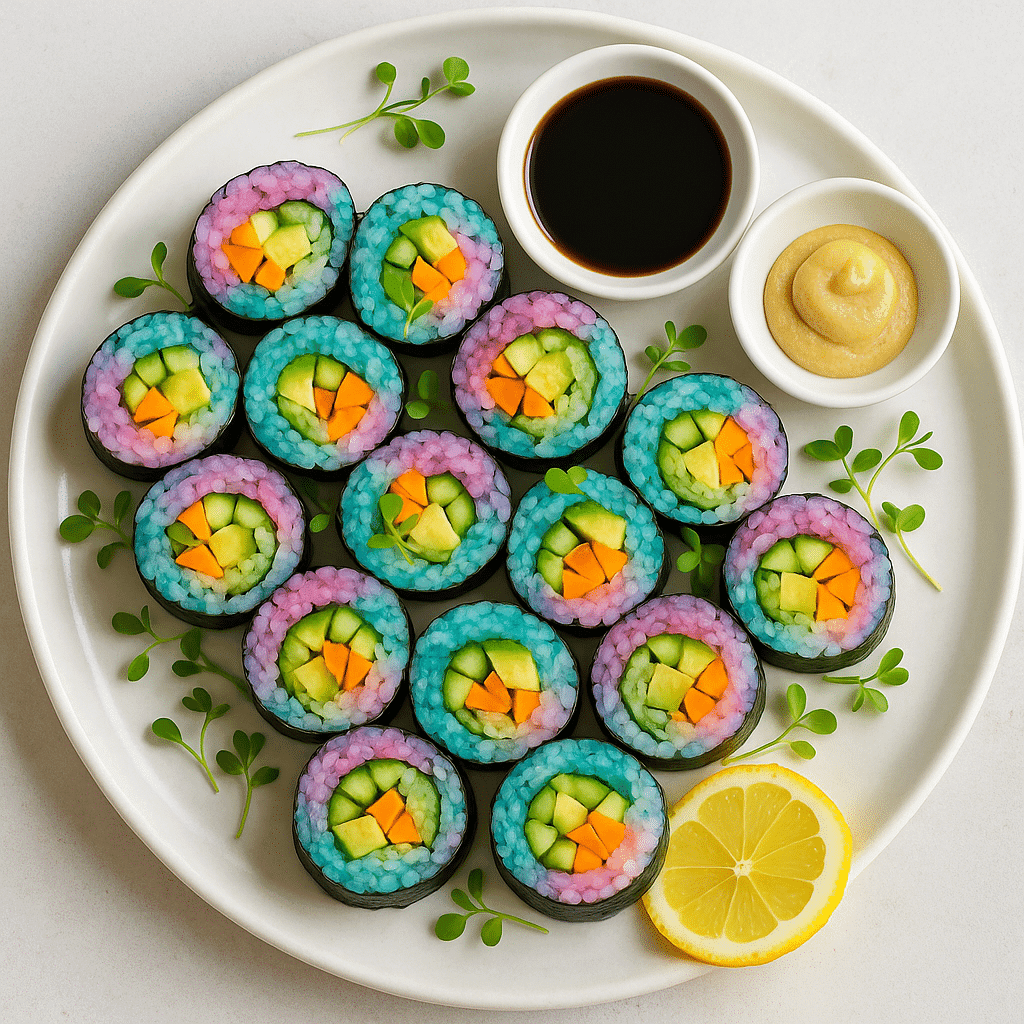
Toppings, Garnishes, and Edible Art for Sushi
Toppings are where your prismatic sushi recipe comes to life. Consider them the finishing touches like jewelry for your culinary creation. Some popular ideas:
- Black sesame seeds for contrast
- Sriracha mayo drizzle for spice and pop
- Microgreens or cilantro sprigs for elegance
- Pickled onions for extra color
- Edible gold flakes or flowers for special occasions
- Nori cut-outs for detail (stars, hearts, etc.)
Bonus tip: Serve your sushi with color-coded sauces in ramekins:
- Green: wasabi + soy
- Orange: spicy mayo
- Purple: beet tahini dip
- Yellow: turmeric aioli
This method enhances the visual theme while offering guests the chance to personalize flavors to their liking.
Hosting a Prismatic Sushi Night: Themes and Sides
Why stop at just sushi? Build an entire experience with a color-themed sushi night.
Theme Ideas:
- Neon Night: Bright LED lights, glow-in-the-dark chopsticks
- Zen Garden: Bamboo runners, candlelight, green tea
- Tropical Vibes: Coconut water, mango mocktails, floral napkins
- Kids Color Party: DIY sushi rolling stations, colorful aprons
Perfect Side Dishes:
- Miso soup with rainbow radish slices
- Seaweed salad with sesame dressing
- Pickled vegetable medley
- Mochi in matching colors
- Cold soba noodles with purple cabbage
It’s not just about serving food it’s about creating a memorable, edible experience.
Looking for another party-worthy food concept? Discover our guide to birthday cake pops here they’re just as colorful and customizable.
Conclusion: Turn Every Bite Into a Masterpiece With This Prismatic Sushi Creation
The prismatic sushi recipe isn’t just a food trend it’s a creative outlet, a wellness boost, and a visual feast rolled into one. Whether you’re cooking for a dinner party, exploring new plant-based meals, or just looking to try something fun and flavorful, prismatic sushi lets you express yourself through color and taste.
From vibrant vegetables and natural food dyes to unique plating ideas and vegan-friendly options, this guide has shown how accessible and customizable this recipe really is. No formal sushi training required just unleash your creativity, grab a bamboo mat, and gather your go-to ingredients.
So why not turn your next meal into a masterpiece? Start with what you’ve learned here and roll with it.
FAQs
What is prismatic sushi?
Prismatic sushi is a modern, colorful variation of traditional sushi that uses naturally dyed rice and vibrant ingredients to create visually striking rolls. Unlike rainbow sushi, which displays colorful toppings, prismatic sushi incorporates its colors internally through layers of rice and fillings resulting in a roll that resembles a prism or mosaic when sliced. It’s both a culinary and artistic experience.
How do you make prismatic sushi at home?
To make prismatic sushi at home, start with sushi rice seasoned with vinegar, sugar, and salt. Divide it into small batches and tint each one with natural food colors like beet juice, matcha, turmeric, or butterfly pea flower. Then, layer the colored rice with colorful vegetables or protein on a sheet of nori and roll using a bamboo mat. Slice with a sharp, wet knife to reveal the prismatic cross-section.
What ingredients are best for prismatic sushi?
The best ingredients include short-grain sushi rice, nori sheets, and a variety of colorful fillings. Some top options are mango, red bell pepper, avocado, purple cabbage, tofu, and pickled radish. Natural colorants like turmeric and beet juice are essential for tinting the rice. You can also add plant-based proteins like jackfruit or tempeh for a vegan-friendly version.
Is prismatic sushi healthy?
Yes, prismatic sushi can be very healthy depending on the ingredients used. It’s often rich in fiber, antioxidants, lean protein, and essential nutrients from veggies like avocado, carrots, and purple cabbage. By using natural colorants instead of artificial dyes, and keeping portions balanced, it becomes a nutritious, low-fat, and customizable meal option.
What’s the difference between prismatic and rainbow sushi?
The main difference lies in where the color appears. Rainbow sushi features different slices of fish laid on top of a roll, often including tuna, salmon, and avocado. Prismatic sushi, in contrast, builds color from the inside out using dyed rice and colorful fillings. Rainbow sushi focuses more on seafood; prismatic sushi emphasizes artistry, plant-based ingredients, and visual layering.
Can prismatic sushi be vegetarian?
Absolutely. In fact, many prismatic sushi recipes are vegetarian or fully vegan. Use ingredients like tofu, avocado, carrots, sweet potato, pickled daikon, and purple cabbage. Skip seafood and instead layer flavors with miso, sesame oil, and plant-based sauces. This version is not only cruelty-free but often more colorful and accessible than traditional sushi.

Prismatic Sushi Recipe – A Stunning Twist to Traditional Rolls
Ingredients
Method
- Rinse 1 cup sushi rice under cold water until clear.
- Combine with 1¼ cups water in a pot. Bring to a boil, then cover and simmer on low heat for 15 minutes.
- Remove from heat and let it rest (covered) for 10 minutes.
- In a small bowl, mix 2 tbsp rice vinegar, 1 tbsp sugar, and ½ tsp salt until dissolved.
- Gently fold the vinegar mixture into the rice using a wooden spatula. Let it cool to room temperature.
- Slice ingredients into thin, even strips: avocado, mango, cucumber, bell pepper, etc.
- Prepare protein (tuna, salmon) and optional toppings (purple cabbage, microgreens).
- Place a bamboo sushi mat on a flat surface and lay a sheet of nori (shiny side down).
- Wet your hands and spread an even layer of sushi rice on the nori, leaving a 1-inch gap at the top.
- Arrange a colorful variety of fillings horizontally across the center of the rice (choose 3–5 colors for a prismatic look).
- Starting from the bottom, use the mat to roll the sushi tightly away from you.
- Press gently as you roll to shape and seal.
- Dip a sharp knife in water and slice the roll into 6–8 even pieces.
- Arrange on a plate, top with sesame seeds or edible flowers if desired.
- Serve with soy sauce, pickled ginger, and wasabi.
Notes
- Use Fresh Ingredients: Color and texture matter. Choose vibrant, crisp vegetables and ripe but firm fruits for the best visual and taste experience.
- Don’t Overfill: Too many ingredients can make the roll difficult to close. Aim for balance both in color and volume.
- Keep Your Hands Wet: Prevent rice from sticking by dipping your fingers in a small bowl of water while handling it.
- Chill Your Knife: A cold, wet, sharp knife will make cleaner cuts without crushing the roll.
- Customize Freely: Prismatic sushi is more about aesthetics and freshness than tradition experiment with your favorite colors and flavors.
- Serve Immediately: Best enjoyed fresh for optimal texture, color, and flavor. Avoid refrigerating for too long as rice may harden.